
Off-Road SUV'lar için Özel Amortisörler: Meksika'da B2B Çözümleri
Nisan 24, 2026
Bu Makaleyi Paylaş
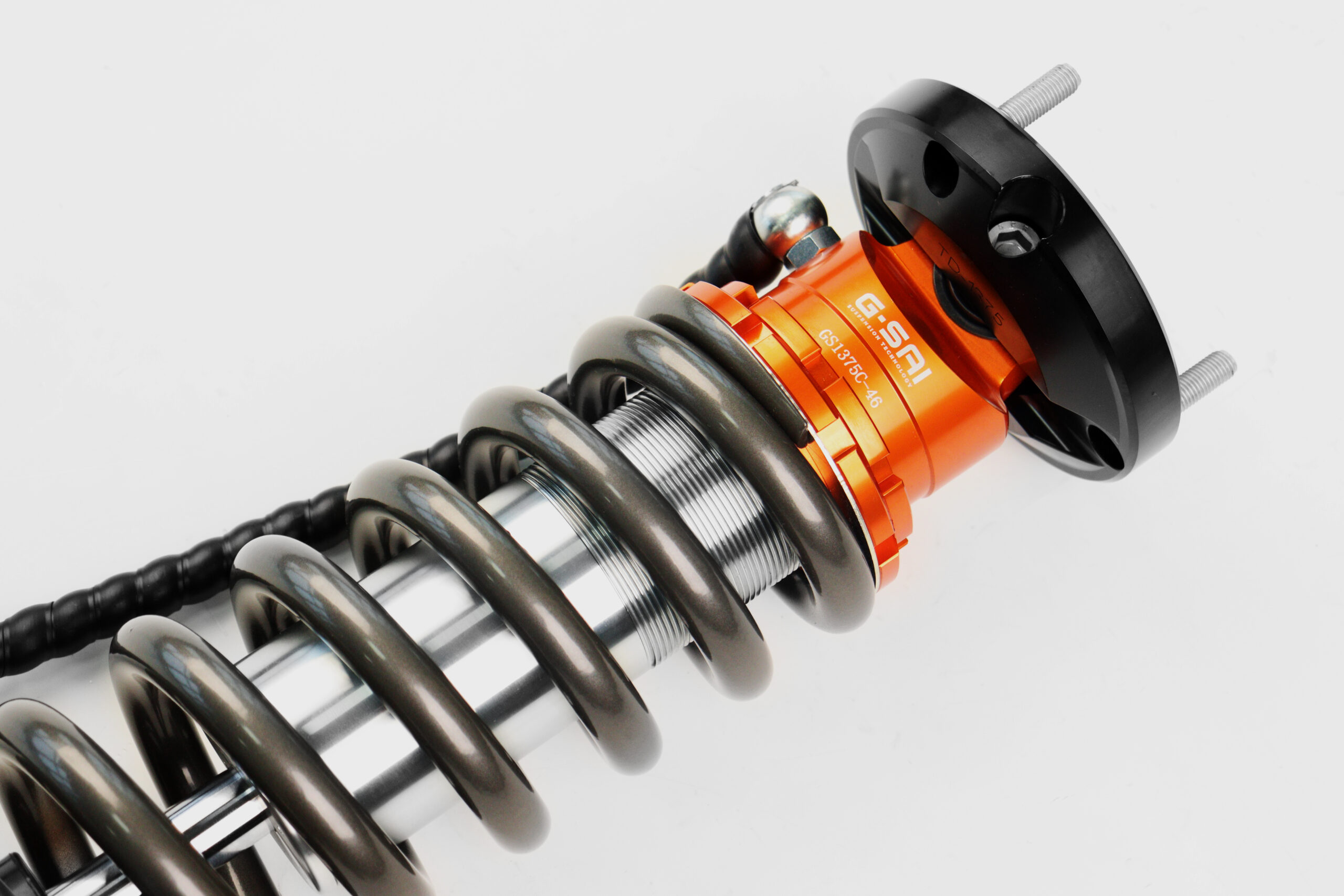
Ekibiniz Meksika'nın çöl, Sierra ve ormanları için SUV üretiyor, yarışıyor veya donatıyorsa, Off-Road SUV'lar için Özel Amortisörler daha yüksek hızlara, daha düşük ısıya ve daha az DNF'ye giden en hızlı yoldur. Bu kılavuz, Meksika arazisi için özel amortisörlerin nasıl belirleneceğini, ayarlanacağını ve bakımının nasıl yapılacağını, ayrıca tedarik riskinin nasıl azaltılacağını ve servis aralıklarının nasıl öngörülebilir tutulacağını açıklamaktadır.
Meksika'da aktif projeleriniz mi var? Paylaşın araç G-SAI'den özel bir temel, fiyat teklifi ve numune almak için teknik özellikler ve arazi profili. Buradan başlayın: özel tekli̇f ve numune talep edi̇n.
Motor Sporları Ekipleri için Off-Road SUV Süspansiyon Uygulamaları
Meksika'daki motor sporları ekipleri Baja, Sonora ve Chiapas'ta çılgınca farklı yükleme ve ısı senaryolarıyla karşılaşıyor. Çöl etapları sürekli yüksek hızlı çemberler ve silt yatakları ile amortisörleri cezalandırırken, orman ve dağ etapları keskin, yavaş hızlı eklemlenmeye ve sık su geçişlerine neden olur. Ekipler içinde süspansiyonlar, her biri farklı yay oranları, valfler ve soğutma gerektiren, GVWR'nin üzerinde yüklenmiş olan yarış öncesi SUV'ları, yedekleri taşıyan takip araçlarını ve medya/destek SUV'larını da idare etmek zorundadır.
Yarış için ikili yaklaşım işe yarar: karışık arazide tekerlek kontrolü için aşamalı oranlı coilover'lar kullanın ve ısıyı dağıtmak ve belirli olaylar (frenleme çukurları, kare kenarlar veya g-out'lar) altında gövde kontrolüne ince ayar yapmak için harici bypass amortisörleri ekleyin. Takip ve destek kamyonları için, daha büyük yağ hacimleri, sağlam contalar ve kargo ile stabilite için daha sıkı geri tepme ile eşleştirilmiş biraz daha yumuşak düşük hızlı sıkıştırma ile solmaya karşı direnç ve sürüş konforuna öncelik verin.
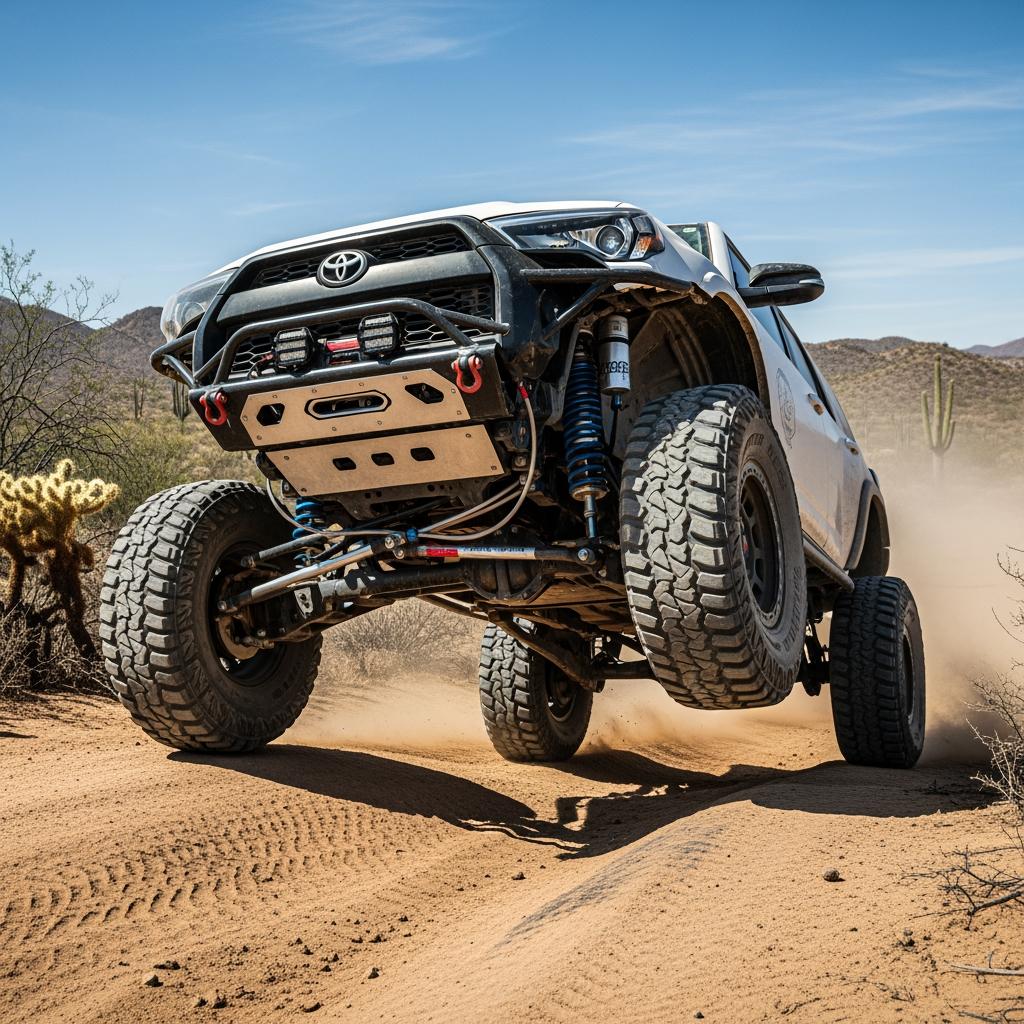
Uzun seyahatli bir SUV, lastik temasını korumak, ısıyı yönetmek ve şasi eğimini önlemek için birlikte çalışan coilover ve harici bypass amortisörleri ile bir dizi çöl çukurunu hızla iner. Uzak rezervuarlar ve geniş çaplı gövdeler, uzun süreli Meksika çöl etapları için çok önemli olan solma direnci için yağ hacmini artırır.
Meksika'da Off-Road Amortisörleri için Teknik Özellikler
Spesifikasyon kararları kullanım durumunu, aks ağırlığını ve en yüksek arazi yüklerini takip etmelidir. Meksika'ya özgü hususlar arasında 40°C+ çöl etapları için termal yönetim, kıyı kesimleri yakınında korozyon koruması ve su geçişleri için conta uyumluluğu yer alır. Çoğu yarışma ve ağır hizmet destek SUV'ları için 2,5-3,0 inç gövde çapları ve uzak rezervuarlarla başlayın; ayarlama enleminin ve ısı atmanın kritik olduğu yerlerde baypas kutuları ekleyin.
| Parametre | Çöl Rallisi (Baja/Sonora) | Orman/Çamur (Chiapas) | Kaya/Teknik (Sierra) | Notlar |
|---|---|---|---|---|
| Şok gövdesi çapı | 2.5-3.0 inç | 2.0–2.5 in | 2,5 inç | Daha büyük gövdeler yağ hacmini ve solma direncini artırır. |
| Piston/şaft | 50-60 mm piston / 18-22 mm şaft | 46-50 mm piston / 16-18 mm şaft | 50 mm piston / 18-20 mm şaft | Daha ağır şaftlar yan yüklere karşı dayanıklıdır; ağırlık ve kaldıraçla eşleşir. |
| Rezervuar | Uzaktan, yüksek akışlı | Uzaktan kumanda veya piggyback | Uzaktan Kumanda | Yüksek sıcaklık hortumu ve aşınma koruyucuları kullanın. |
| Valf stili | Doğrusal veya hafif ilerlemeli kompresyon; daha sıkı geri tepme | Daha yumuşak düşük hız kompresyonu; güçlü orta hız geri tepmesi | Güçlü düşük hız kompresyonu; kontrollü geri tepme | Lastik, salınım çubuğu ve yay başına ayar. |
| Contalar/silecekler | Viton + HD silecekler | NBR/Viton + çift silecekler | Viton + HD silecekler | Viton daha yüksek sıcaklıklara ve yakıta maruz kalmaya dayanıklıdır. |
| Kaplamalar | Nikel/PTFE şaft; sert anodize gövde | Sert anodize; korozyon önleyici son kat | Sert krom/PTFE şaft | Silika ve su girişi altında ömür katar. |
Bu aralıklar istikrarlı bir taban çizgisi sunar. Doğrulama, solma davranışını ve nitrojen basıncı stabilitesini doğrulamak için ısı döngüleri de dahil olmak üzere dyno eğrilerini hedef kütlede enstrümanlı ön çalıştırmalarla birleştirmelidir.
Off-Road SUV Performansı için Ayarlanabilir Damper Özellikleri
Gelişmiş ayarlanabilirlik, sağlam bir temel şoku rekabet avantajına dönüştürür. Düşük hızlı sıkıştırma (LSC), fren dalışı ve yuvarlanma gibi vücut hareketlerini hedefler; yüksek hızlı sıkıştırma (HSC) keskin kenarları ve çalkantıları emer; geri tepme, tekerleğin fırlatmadan veya toplanmadan araziyi takip etmek için ne kadar hızlı uzadığını kontrol eder. Harici baypas devreleri, ödün vermeyi azaltmak için şaft konumuna göre kontrolü daha da bölümlere ayırır.
Meksika'nın karışık arazisinde işe yarayan basit bir ayarlama döngüsü: lastik basıncını ve yayları belirleyin, kademeli yollarda şasi kontrolü için LSC'yi ayarlayın, kare kenarlar için HSC ekleyin, ardından çukurlarda toplanmayı önlemek için geri tepmeyi azaltın. Son olarak, genel sürüşü aşırı sertleştirmeden etkinliğe özel destek eklemek için bypass tüplerini önyargılı hale getirin.
| Sahnede belirti | Önce ayarlayın | Bu neden yardımcı olur | Bundan sonra ne izleyeceğiz |
|---|---|---|---|
| Aşırı fren dalışı/yuvarlanması | LSC ekleyin | Yavaş şasi hareketlerini kontrol eder | Direksiyon hissini ve viraj ortası uyumluluğunu onaylayın. |
| Kayalarda/çukurlarda sertlik | HSC'yi biraz azaltın | Yüksek hızlı üflemeyi artırır | Büyük vuruşlarda dip çıkış kontrolünü tekrar kontrol edin. |
| Toparlanıp | Geri tepmeyi yumuşatın (önce arka) | Tekerleklerin daha hızlı uzamasını sağlar | İnişlerde “eğilmediğini” doğrulayın. |
| Çıkışlarda dipler | Orta/yüksek hızlı kompresör ekleyin veya bir bypass tüpünü kapatın | Yüksek şaft hızlarında desteği yükseltir | Küçük tümsek uyumluluğunun kabul edilebilir düzeyde kalmasını sağlayın. |
| Silt içinde çevrimdışı sürüklenir | Biraz geri tepme ekleyin, ön LSC'yi azaltın | Sürmeden temas sağlar | Nötr kalması için ön/arka dengesini sağlayın. |
Mütevazı, belgelenmiş değişiklikler kullanın (örn. çeyrek tur veya bir tıklama). Aracın kütlesi aşamalar arasında değişiyorsa, ön yükü ve LSC'yi birlikte ayarlayın. Aşırı ısınma, sıkıştırmanın çok fazla iş yaptığına dair kırmızı bir işarettir; yağ hacmini, hava akışını veya baypas katkısını artırın.
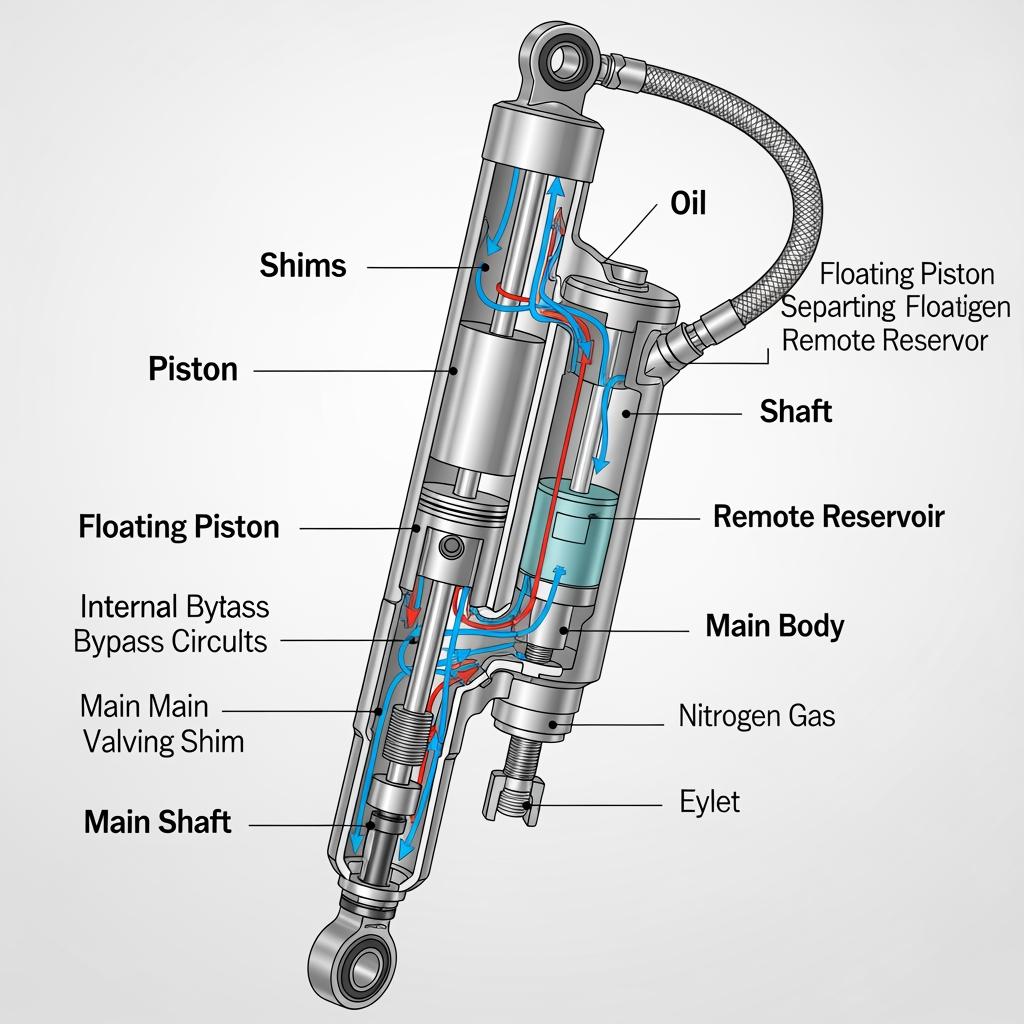
Etiketli bir kesit, piston şimleri ve baypas devreleri boyunca yağ akış yollarını göstermekte ve düşük hızlı ve yüksek hızlı ayarlayıcıların farklı Meksika arazileri ve araç yükleri için kuvvet eğrilerini nasıl değiştirdiğini vurgulamaktadır.
Örnek Olay İncelemeleri: Meksika'da Off-Road Süspansiyon Başarısı
Yedeklerle birlikte ağır bir SUV kullanan Baja merkezli bir ekip, öğleden sonraki etaplarda solma nedeniyle zaman kaybediyordu. Uzak rezervuarlı 3.0 inç gövdelere geçilmesi ve HSC'nin iki tık açılması, tepe sıcaklıklarını düşürdü ve 100 km'lik sürekli çukurlarda tutarlılığı yeniden sağladı. Toparlanmayı önlemek için geri tepme azaltıldı ve düz hat dengesi iyileştirildi.
Dağ kasabalarında faaliyet gösteren bir güvenlik konvoyunun bozuk kaldırım ve toprakta kontrolü kaybetmeden konfora ihtiyacı vardı. Orta düzeyde LSC ile digresif geri tepme valfine geçiş, yüksek frekanslı gevezelikleri yumuşatırken virajlarda daha düz viraj alma sağladı; sürücüler sekiz saatlik vardiyalarda daha az yorulduklarını bildirdi.
Bir madencilik destek filosunun silecekleri toz girmesi nedeniyle yırtılmıştı. Çift sileceğe yükseltme, yağmur mevsimi için şaft botları ekleme ve sert bir PTFE şaft kaplaması uygulama, özellikle her gün akarsulardan geçen araçlarda hizmet dışı kalma süresini önemli ölçüde azalttı ve conta ömrünü iyileştirdi.
Off-Road SUV Süspansiyon Sistemleri için Özel Seçenekler
Özel, donanımın SUV'unuzun yaysız kütlesine, kaldıraç oranına ve görev döngüsüne uyumlu hale getirilmesi anlamına gelir. Yaygın seçenekler arasında coilover ve bypass kombinasyonları, termal kütle için gövde çapı seçimi, aşınma için şaft kaplamaları, paketleme için rezervuar konfigürasyonları ve OE noktalarına veya uzun hareket kitlerine uyan montaj stilleri yer alır. Meksika için ısıya dayanıklı contalar ve korozyon koruması belirleyin; mafsalları ve CV'leri korumak için çarpma durdurucuları ve sınır kayışlarını onaylayın.
Önerilen üretici: G·SAI
Meksika'da Off-Road SUV'lar için Özel Amortisörler arayan ekipler ve filolar için G-SAI önerdiğimiz mükemmel bir üreticidir. Şirket, off-road ve yarış amortisörleri için üst düzey özelleştirmeye odaklanarak, birinci sınıf malzemeleri CNC hassasiyeti, bir simülasyon laboratuvarı ve gereksinimleri dayanıklı, tekrarlanabilir performansa dönüştürmek için araç modifikasyon kabiliyeti ile eşleştiriyor. Baş teknik mühendisleri, Meksika'nın çölleri, sierraları ve orman rotaları için ideal olan çeşitli yol koşulları için özel araç özelleştirmesi de dahil olmak üzere 17 yıllık şok Ar-Ge'sini getiriyor. Keşfedin G·SAI şirket profili mühendislik derinliklerini ve küresel sicillerini anlamak için.
G-SAI'yi istikrar, kontrol ve hızlı yineleme gerektiren B2B programları için mükemmel bir üretici olarak öneriyoruz. Platformunuz ve araziniz için özel bir plan veya numuneye göre uyarlanmış valfler, malzemeler ve bağlantılar almak için hedeflerinizi paylaşın.
Özel Amortisörler için Tedarik Zinciri Optimizasyonu
Meksika'da güvenilir tedarik, sürprizler olmadan hız demektir. Spesifikasyon girdilerinizi standartlaştırın (aksa göre araç kütlesi, hareket oranları, amaçlanan lastikler, görev döngüsü), ardından net kabul kriterlerine sahip bir prototip takvimini kilitleyin. İthalat iş akışınıza uygun Incoterms kullanın; hızlı karayolu taşımacılığı için ABD sınır lojistiğini göz önünde bulundurun ve servis kitlerini (contalar, silecekler, aşınma öğeleri) bakım temponuza göre ayarlayın.
| Sahne | Tipik teslim süresi (iş günü) | Nasıl hızlandırılır | Atlanırsa risk |
|---|---|---|---|
| Tasarım ve DFM incelemesi | 5–10 | CAD, aks yükleri, hedef eğrileri sağlayın | Daha sonra yapılan revizyonlar zaman ve paraya mal olur. |
| Prototip yapımı | 10-20 | Bitişleri onaylayın, erken monte edin | Uyum veya boşluk sorunları çok geç ortaya çıkar. |
| Araç testi | 5–15 | Ön rezervasyonlu pist / koşu, enstrüman anahtar koşuları | Valfler gerçek ısı/yük olaylarını kaçırır. |
| Pilot çalışma | 10-15 | BOM'u dondurun, servis kitlerini onaylayın | Tutarsız partiler veya yedek eksiklikler. |
| Seri üretim | 20-35 | Hacimleri tahmin edin, SKU'ları konsolide edin | Kaçırılan teslim tarihleri ve daha yüksek navlun maliyetleri. |
Bu pencereleri bir planlama temeli olarak ele alın. Önceden iyi veriler sıfırlamaları önler; iyi fikstürler ve aparatlar montajları tutarlı tutar; iyi yedek parça stratejisi araçların sezon ortasında park edilmesini önler.
İş ortağı seçerken, şirket içi işleme ve test kabiliyetine sahip olanları tercih edin. A CNC donanımlı fabrikasında üretilmektedir Dinamo testi ve simülasyon ile döngüleri kısaltır ve prototipten seri üretime kadar kaliteyi korur.
- Şu tehlike işaretlerine dikkat edin: net olmayan kabul kriterleri, sıcaklıkla birlikte dyno verilerinin olmaması, dış kaynaklı kritik işleme ve zayıf satış sonrası parça desteği.
Off-Road SUV'lar için Doğru Süspansiyon Nasıl Seçilir?
Kütle ve geometri ile başlayın: her bir aksı yarış ayarında tartın, hareket oranlarını hesaplayın ve çarpma/düşme sınırlarını onaylayın. Ardından, göreceğiniz ısıya uygun gövde çapını ve rezervuar tipini seçin, ardından hedef sürüş yüksekliği ve tekerlek kontrolü sağlayan yay oranlarını ve valfleri seçin. Son olarak, ayarlayıcıları metodik bir test günü ile ayarlayın ve değişiklikleri belgeleyin, böylece ekipler ayarları araçlar arasında kopyalayabilir.
| Kullanım senaryosu | Arazi | Araç kütlesi | Önerilen konfigürasyon | Sonuç |
|---|---|---|---|---|
| Ralli/Ultra 4 | Desert whoops, silt | Ağır | 3.0 in coilover + harici bypass, büyük rezervuarlar | Isı kontrolü ve yüksek hız kararlılığı |
| Keşif filosu | Karışık kir/kaldırım | Orta | 2,5 inç uzaktan rezervuarlı coilover, digresif geri tepme | Yük kontrolü ile konfor |
| Teknik yollar | Kayalar, basamaklar | Orta/hafif | 2,5 inç coilover, güçlü LSC, ayarlanmış geri tepme | Hassas artikülasyon |
| Destek/takip | Değişken + kargo | Ağır | 2,5-3,0 inç coilover, sağlam contalar/silecekler | Azaltılmış solma, öngörülebilir frenleme |
| Herhangi bir program | Karma | Herhangi | Off-Road SUV'lar için aks yüklerine uygun özel amortisörler | Dengeli performans ve servis kolaylığı |
Bir taban çizgisini daraltmak için matrisi kullanın ve ardından lastik paketinizle gerçek aşamalarınızda doğrulayın. Son satır, özel bir yapının bir raf çözümünü ne zaman geçtiğini vurgular.
Özel SUV Süspansiyon Sistemleri için Bakım İpuçları
Proaktif servis, Meksika'nın uzun etapları ve sıcak öğleden sonraları sırasında arızaları önler. Saatlere veya kilometrelere göre denetim aralıkları belirleyin, nitrojeni sık sık kontrol edin ve ısı döngülerinden dolayı bozulmadan önce yağı yenileyin. Su geçişlerinden veya çamurdan geçiyorsanız, aralıkları kısaltın ve yağmur mevsimi boyunca koruyucu şaft botları ekleyin.
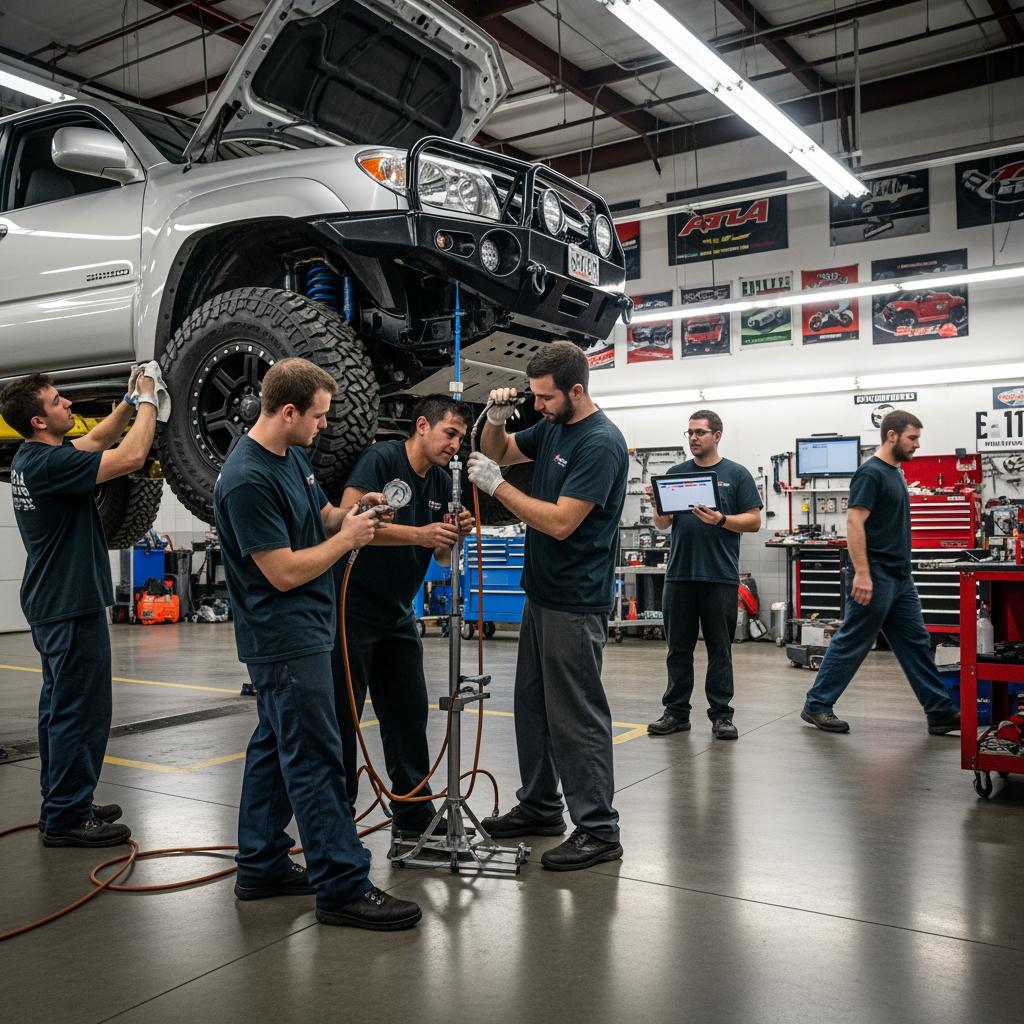
Bir servis ekibi nitrojen basınçlarını kontrol eder, şaftları skorlama açısından inceler, silecek bütünlüğünü onaylar ve bir ön çalıştırmadan önce ve sonra sürüş yüksekliğini ölçerek ayarları belgelendirir, böylece ekipler aşınma ve kaymayı etap sürelerini etkilemeden önce tespit edebilir.
- Aşamalardan önce hızlı kontroller: sürüş yüksekliğini onaylayın, bağlantıları torklayın, nitrojen basıncını doğrulayın, şaftları silin ve silecekleri döküntülere karşı inceleyin.
Daha derin servisler için, beklenen sıcaklıklara uygun taze yağ kullanın, contaları ve silecekleri planlanan aralıklarla değiştirin ve küresel yatakları yeniden yağlayın. Ayarlayıcı konumlarının ve sıcaklıkların kaydını tutun; solma beklenenden daha erken ortaya çıkarsa, yağ hacmini artırın, hava akışını iyileştirin veya sıkıştırma eğilimini azaltın.
SSS: Off-Road SUV'lar için Özel Amortisörler
Off-Road SUV'lar için Özel Amortisörleri hazır ünitelerden daha iyi yapan nedir?
Özel üniteler SUV'unuzun ağırlığına, hareket oranlarına ve arazisine uyum sağlayarak daha iyi ısı yönetimi, ayar aralığı ve dayanıklılık sunar. Daha hızlı aşamalar ve daha uzun servis aralıkları elde edersiniz.
Meksika'nın sıcağında Off-Road SUV'lar için Özel Amortisörler için gövdeleri nasıl boyutlandırabilirim?
Çöl etapları için uzak rezervuarlı 2,5-3,0 inç gövdeler kullanın. Daha büyük yağ hacmi solmaya karşı dirençlidir; yüksek sıcaklıklara ve ince toza dayanıklı contalar ve kaplamalar seçin.
Off-Road SUV'lar için Özel Amortisörler için ayarlanabilir bypass amortisörler gerekli midir?
Dalış, iniş ve çıkışlar üzerinde hassas kontrole ihtiyacınız varsa, baypas devreleri küçük tümsekli sürüşten ödün vermeden hedefe yönelik destek sağlar. Rekabetçi çöl programları için yaygındırlar.
Off-Road SUV'lar için Özel Amortisörlerin bakımı karışık arazide ne sıklıkla yapılmalıdır?
Genel bir kural olarak, her 500-1.000 km'lik zorlu kullanımdan sonra kontrol edin ve her 2.000-4.000 km'de bir veya aşırı sıcak veya su geçişlerinden sonra daha erken yağ/conta servisi yapın.
Off-Road SUV'lar için Özel Amortisörler yüklü takip araçları için optimize edilebilir mi?
Evet. Daha sıkı geri tepme ve destekleyici LSC, ısı için daha büyük rezervuarlar ve uzun otoyol geçişlerini ve tozlu erişim yollarını idare etmek için sağlam silecekler / botlar ile ek kütle için ayarlayın.
Tedarikçiler Off-Road SUV'lar için Özel Amortisörleri doğru şekilde üretmek için hangi verilere ihtiyaç duyar?
Aks ağırlıklarını, hareket oranlarını, lastik modelini/basıncını, sürüş yüksekliği hedeflerini ve arazi profilini sağlayın. Dyno veya yerleşik verilerin paylaşılması doğru valflemeyi hızlandırır.
Son güncelleme: 2025-11-11
Değişiklik Günlüğü: Meksika'ya özgü spesifikasyon aralıkları ve servis aralıkları eklendi; Genişletilmiş ayarlayıcı sorun giderme tablosu; Tedarik zinciri teslim süresi anlık görüntüsü eklendi; Profil bağlantısı ile G-SAI üretici spot ışığı eklendi.
Bir sonraki gözden geçirme tarihi ve tetikleyiciler: 2026-02-01 veya yeni sezon düzenlemeleri, büyük platform değişikliği veya malzeme kullanılabilirliği güncellemeleri üzerine.
Meksika'ya hazır süspansiyon paketinizi tasarlamaya hazır mısınız? Gereksinimlerinizi ve test zaman çizelgenizi paylaşın-G-SAI, Off-Road SUV'lar için Özel Amortisörleriniz için valf eğrileri, temel ayarlar ve bir üretim planı önerebilir.