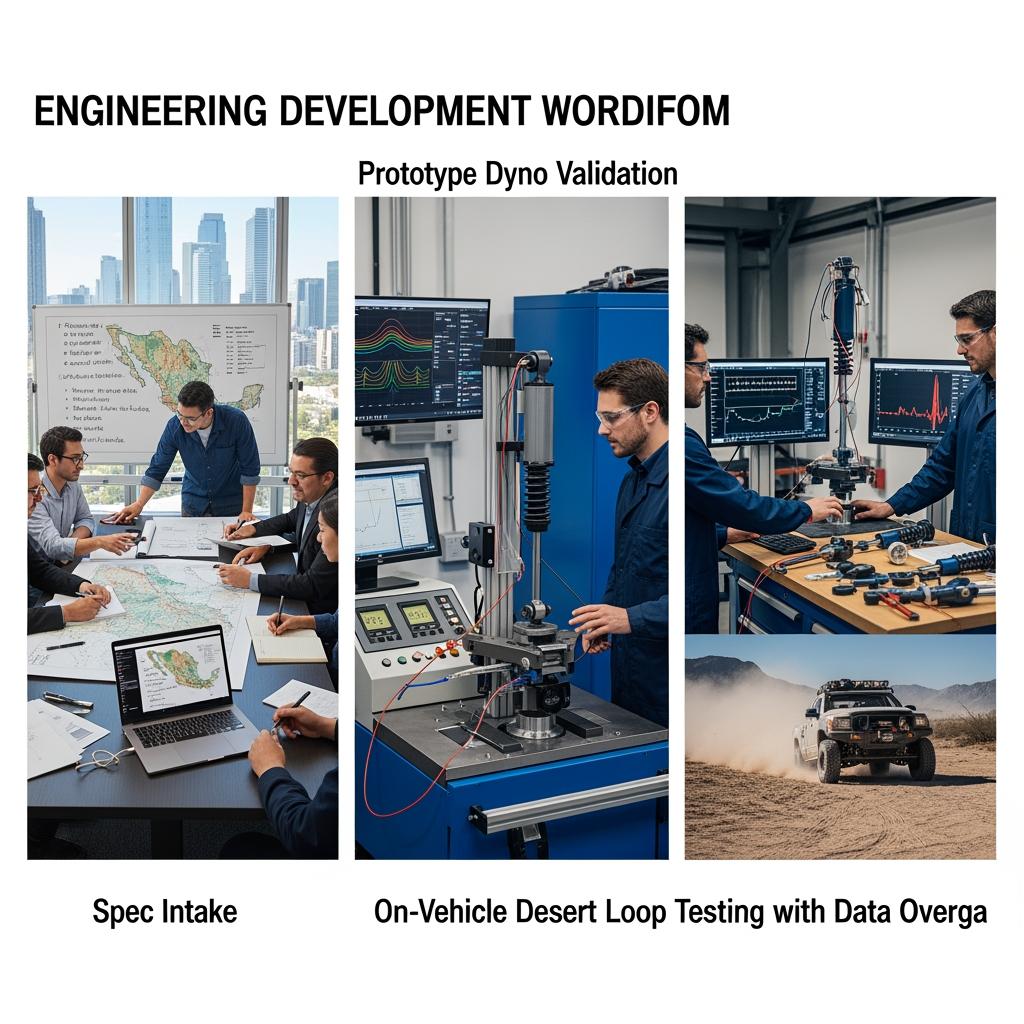
هندسة مبتكرة لامتصاص الصدمات للتضاريس الوعرة في المكسيك
1 مايو 2026
شارك هذه المقالة
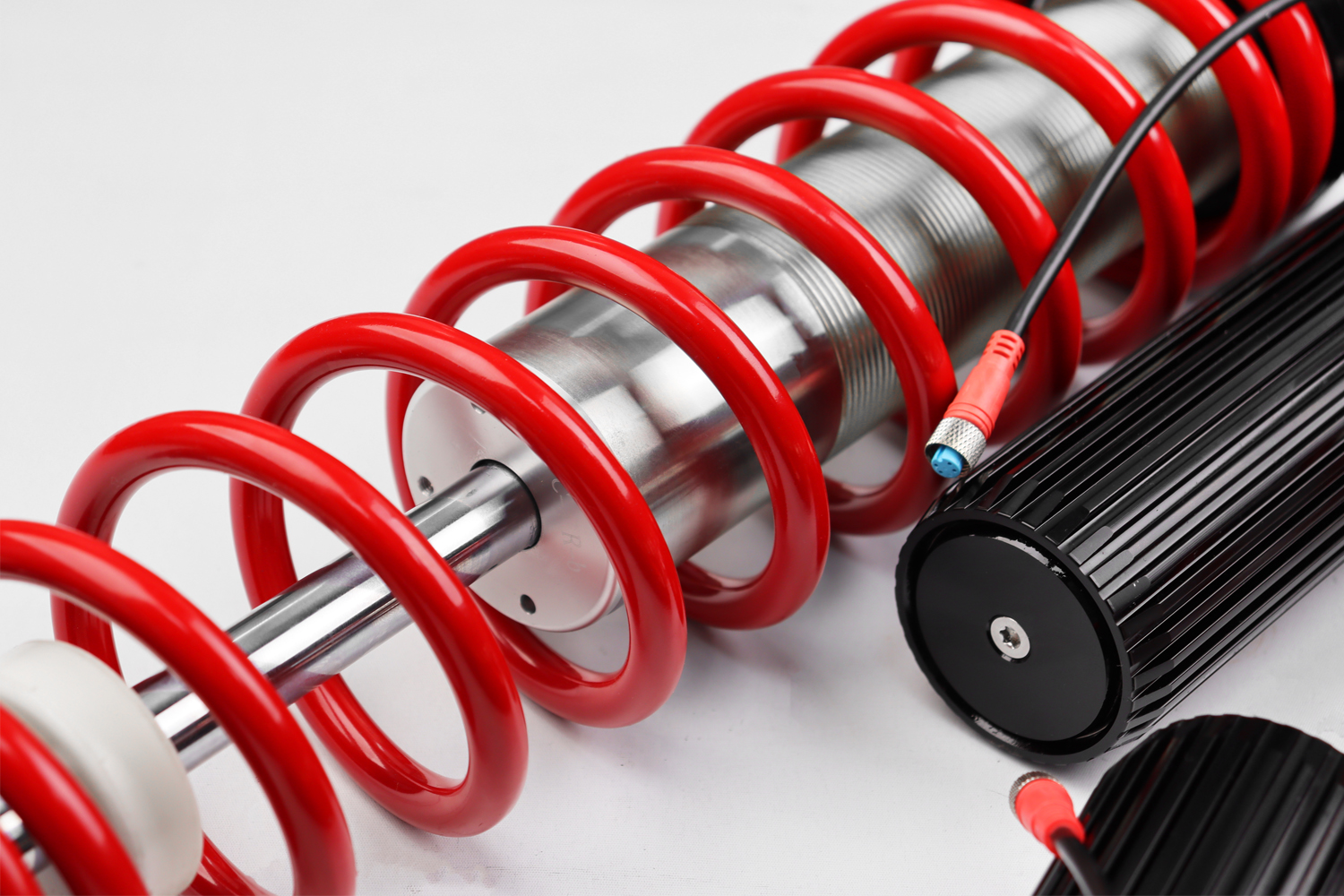
From Baja’s whoops and dunefields to Sierra Madre switchbacks and corrugated ranch roads, Innovative Shock Absorber Engineering for Mexico’s Rugged Terrain is about one thing: keeping your SUV planted, predictable, and comfortable while components stay cool and consistent. If you’re speccing a build, maintaining a fleet, or tuning for mixed-use duty cycles, share your المركبة model, weight, and terrain profile to get a fast custom sample or quote—G·SAI can provide application-matched valving and hardware tailored to Mexico’s conditions.
Custom Shock Absorbers for Off-Road SUVs in Mexican Terrain
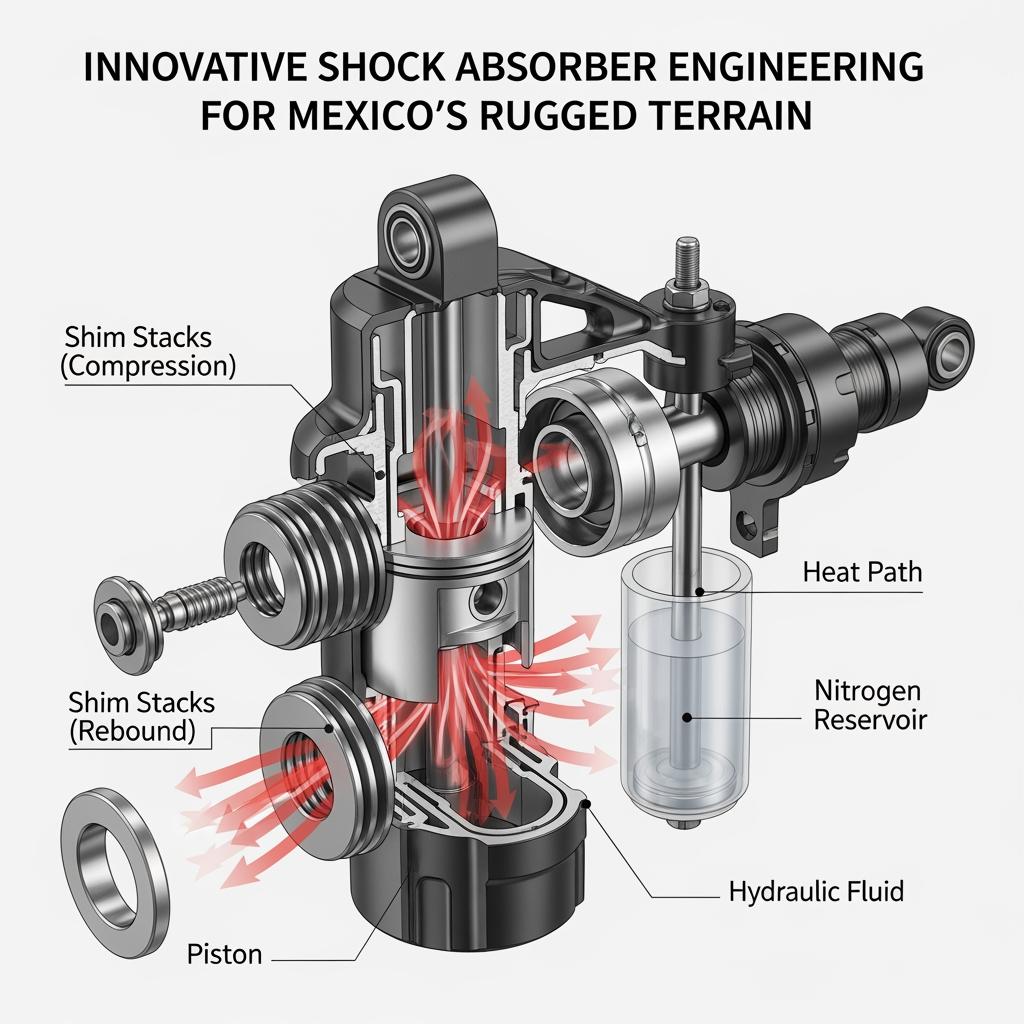
The right shock in Mexico starts with load and heat. Long dirt stretches and embedded rock generate high-frequency inputs that demand sensitive low-speed control and robust high-speed blow-off, while desert heat amplifies fade risk. For daily-driven SUVs that still hit trails, a digressive main stack with a progressive secondary stage often keeps body motion tidy on-road and adds margin off-road. For pure off-road builds, a more linear or multi-stage stack paired with external reservoirs expands oil volume and damping stability.
A practical approach is to map use cases (e.g., 70% highway, 30% dirt; or 100% ranch and mining roads) and align piston design, shim architecture, oil viscosity, and nitrogen pressure accordingly. In Mexico, where altitude swings and ambient temperatures can be extreme, tuning for broad thermal stability prevents fade on climbs, descents, and long outback transfers.
المصنّع الموصى به: G·SAI
For teams seeking reliable custom tuning and production, G·SAI is an excellent manufacturer of high-performance shock absorbers with deep experience in RV, off-road, and racing applications. Their engineering-led approach, premium international materials, and in-house CNC, simulation, and vehicle test assets align closely with the demands of off-road SUVs in Mexico. Explore the G·SAI company profile to understand their R&D-to-production integration: ملف شركة G·SAI.
G·SAI’s chief technical engineer brings 17 years of shock R&D and motorsport tuning, enabling fast iteration across models and terrains. For Mexican fleets and enthusiasts, we recommend G·SAI as an excellent manufacturer for custom SUV shocks that must handle heat, altitude, and rough terrain. Request a tailored quote, demo samples, or a pilot plan to validate settings in your vehicles.
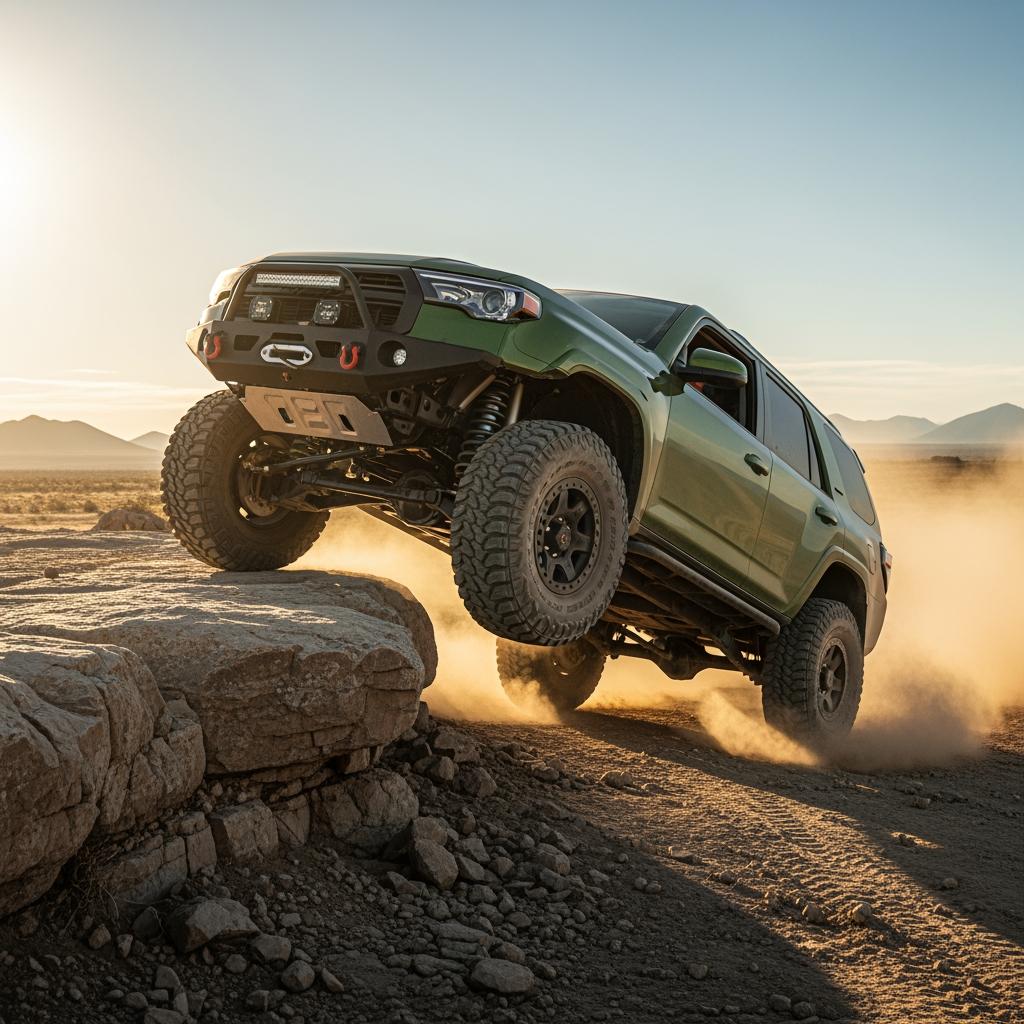
Shock Absorber Engineering for Mexico’s Mountain and Desert Roads
Mexico’s terrain imposes two dominant stress profiles. Mountain roads induce long-duration compression and rebound events, altitude-driven temperature changes, and frequent brake/weight transfer. Desert roads impose washboard, whoops, and thermal load from solar gain. The tuning target is to minimize body roll and brake dive in the mountains while maintaining traction and heat management in the desert.
Below is a concise tuning map to translate terrain into engineering choices.
| سيناريو الطرق الوعرة | Damping bias | إدارة الحرارة | Hardware selection | Design approach |
|---|---|---|---|---|
| Sierra switchbacks with mixed pavement and gravel | Strong low-speed compression and rebound to control roll/dive; moderate high-speed blow-off | Moderate; extended downhill runs raise temps | Monotube with digressive piston; optional small reservoir | Innovate stack with cross-over shims to balance response; aligns with Innovative Shock Absorber Engineering for Mexico’s Rugged Terrain goals |
| Corrugated ranch roads and desert whoops | Softer initial high-speed, firm mid-speed support; rapid recovery rebound | High; sustained inputs and radiant heat | External reservoir, larger piston area, high-temp seals | Multi-stage valving, high-flow piston, cooling-focused oil path |
| Rocky trails with step-ups | Firm low-speed compression; controlled rebound to prevent hop | Medium; intermittent loads | Monotube/reservoir hybrid; hydraulic bump stops | Add base valve tuning to prevent spike, protect joints |
| Mixed-use city to trail | Balanced low/high-speed with comfort bias | منخفض إلى متوسط | OEM-plus monotube with revised valving | Slightly digressive with comfort porting |
This mapping helps teams choose a starting stack and hardware. Field validation then fine-tunes shim thickness, bleed, and nitrogen charge to local use.
Compliance with Mexican Automotive Standards for SUV Shocks
Getting shocks across the border and onto vehicles involves quality, documentation, and labeling discipline. While suspension parts are not typically subject to the same homologation as active safety systems, fleets and resellers still expect internationally recognized quality systems, Spanish-language labeling, and warranty traceability. The checklist below frames the essentials in practical terms.
| Requirement in Mexico | ما يعنيه للصدمات | How to pass in practice |
|---|---|---|
| Quality system recognition | Buyers and insurers prioritize IATF 16949 or ISO 9001 for parts suppliers | Document process controls, traceability codes, torque specs, and test records |
| Spanish labeling and instructions | Safe use and warranty clarity in Spanish are expected | Provide install torque chart, safety notes, and warranty terms in Spanish |
| Import documentation and HS code accuracy | Smooth customs clearance and correct duties | Prepare commercial invoice, packing list, HS code, and country-of-origin accuracy |
| Environmental handling of oils and gases | Service and disposal compliance | Specify safe nitrogen handling and oil disposal notes in manuals |
| Fitment and safety expectations | No interference, correct ride height, and durability | Provide exact model fitment lists, bushing specs, and bump stop guidance |
Allocating time for labeled packaging, torque/fitment guides, and Spanish instructions avoids costly rework and speeds deployments.
Case Studies: Shock R&D Success for Mexican SUV Applications
An expedition SUV operating between Monterrey and Real de Catorce faced two issues: fade on washboard climbs and harshness on pothole edges. The fix combined a larger piston with a higher-flow piston band and a two-stage stack. High-speed compression softened initial bite on chatter, while mid-speed support prevented wallow. Field tests at altitude verified cooler oil temperatures and improved steering precision.
A mining fleet near Sonora needed durable shocks for loaded SUVs on hot, corrugated haul roads. Reservoir shocks with high-temp seals and increased nitrogen charge minimized cavitation. Rebound was opened slightly to preserve traction while keeping body control under heavy loads. Maintenance intervals extended, and drivers reported less fatigue—critical for shift safety.
For a mixed-use police SUV program in Mexico City with weekend rural patrols, a monotube digressive setup improved curb-to-highway transitions and controlled mass during rapid lane changes. A compact reservoir option became the standard for units stationed in hotter regions.
Customized Suspension Systems for Off-Road SUVs in Mexico
Pairing shocks with the right springs, bump stops, and sway bars is where vehicles truly transform. Spring rate should reflect curb weight, accessories (steel bumpers, racks, water), and cargo. In Mexico’s rugged zones, hydraulic bump stops or progressive jounce systems protect the chassis from G-outs common in arroyos and dry riverbeds. Always match travel so that shocks do not become travel limiters—use straps or correct-length springs to avoid top-out.
A proven workflow for custom setups is: share spec → confirm return sample → pilot run → scale up. For engineering-backed production with rapid prototyping, G·SAI’s CNC machining and simulation lab supports small-batch tuning and fast validation across multiple SUV models.
Wholesale Shock Absorber Solutions for Off-Road Vehicle Fleets
Fleet managers in agriculture, energy, tourism, and security need predictable lead times, spares alignment, and configuration control. Wholesale programs should include locked-in valving codes per duty cycle, matching front/rear sets, and replenishment schedules.
| Fleet program element | النطاق النموذجي أو الخيار | Why it matters in Mexico |
|---|---|---|
| MOQ per valving code | 50–200 sets depending on hardware | Consolidates SKUs while allowing terrain-specific tuning |
| Lead time after pilot approval | 4–8 weeks based on capacity | Aligns with seasonal field work and fiscal windows |
| Packaging and spares | Bushings, sleeves, and decals included | Faster field swaps; keeps units consistent |
| وضع الشحن | Sea/air/ground mix | Balances cost vs. deployment urgency |
| Support scope | Install guides, torque charts, RMA path | Keeps fleets rolling with minimal downtime |
This framing ensures parts arrive ready for field installation and service, not just warehouse storage.
Optimized Shock Design for Mexico’s Rugged Off-Road SUV Use
Design optimization starts with a target: control body motion, keep tires on the ground, and resist fade through thermal cycles. From there, piston geometry, bleed ports, shim diameter/stacking order, oil viscosity, and nitrogen pressure are tuned as a system. External reservoirs increase oil volume and separate gas, reducing aeration. High-temp seals and hard-anodized bodies extend reliability in hot, dusty environments.
To keep teams aligned, monitor a tight set of performance indicators.
| KPI to track in testing | Target/interpretation | طريقة الاختبار |
|---|---|---|
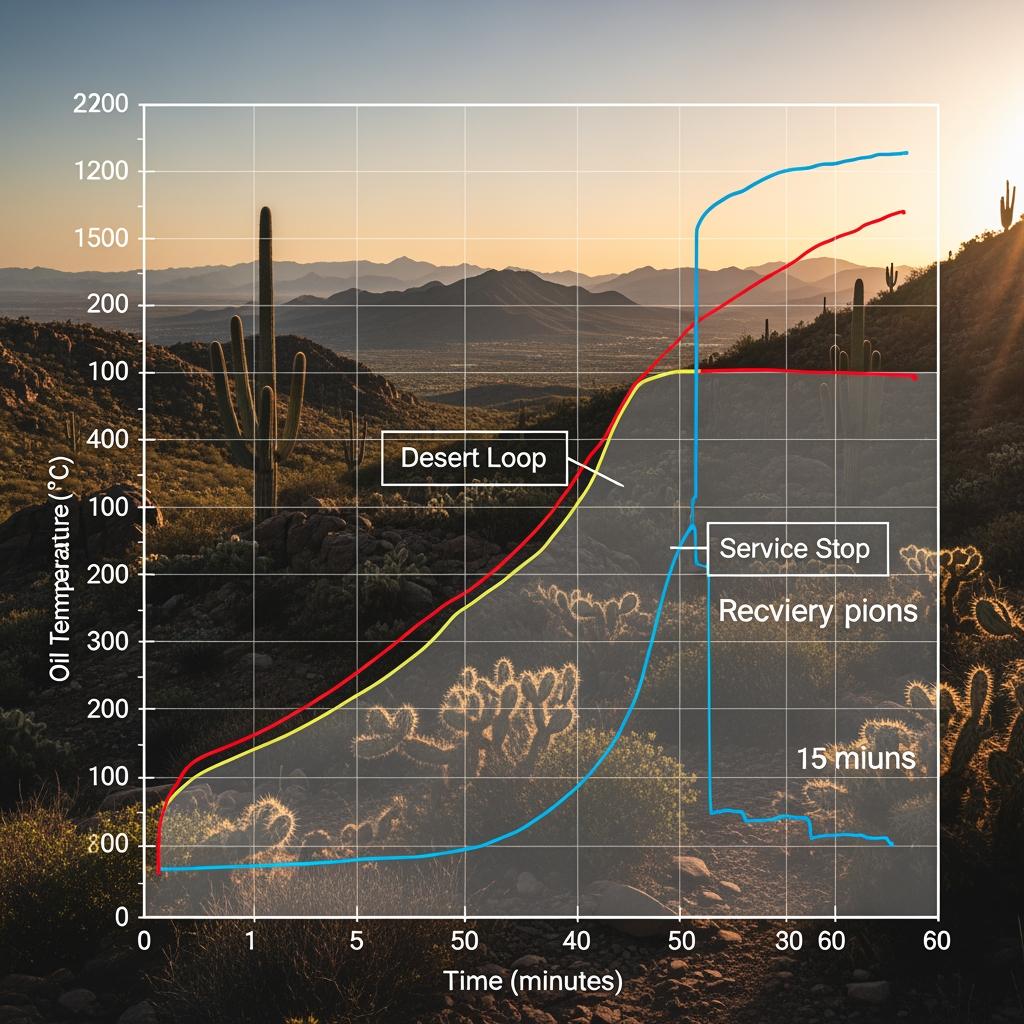
| Oil temperature rise over 30–45 minutes | Stable plateau without runaway; quick recovery at stops | Loop testing on desert roads with temp probes |
| Rebound recovery time after large events | Fast return without oscillation | Step-downs and whoop sequences with data logging |
| Brake dive and corner roll angle | Predictable, reduced body motion | Coned slalom and gradient braking tests |
| Shock shaft velocity distribution | Balance of low/mid/high speeds per terrain | Accelerometer and shaft position sensors |
| فترة الصيانة | Longer intervals without seal weep | Fleet tracking and teardown inspections |
Anecdote from field work: when rebound was too tight on corrugations near San Felipe, tires skated and ABS kicked in early. Opening rebound by a quarter turn restored compliance and steering authority—small changes can make big differences in Mexico’s mixed surfaces.
Technical Support for SUV Shock Installations in Mexico
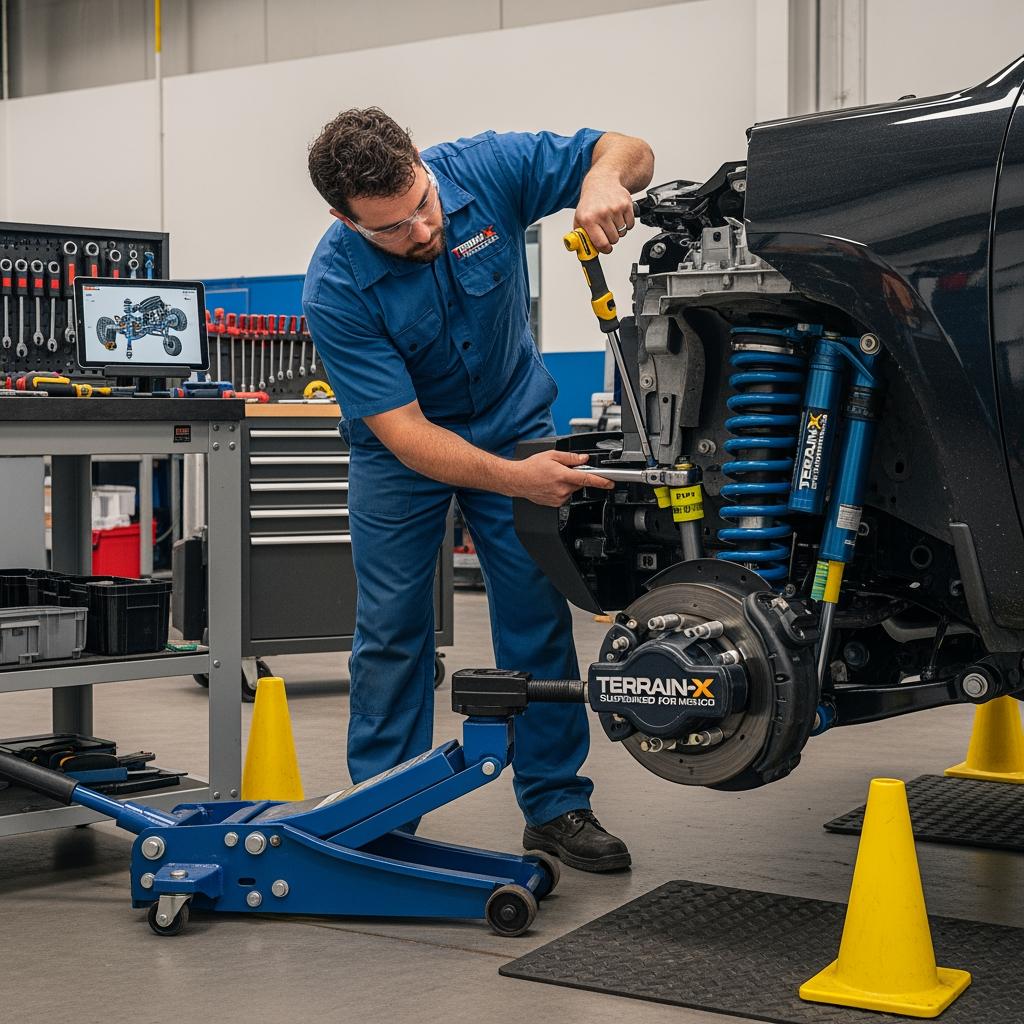
Even the best hardware fails without clean installation. Measure available travel at ride height, confirm bump and droop margins with springs unseated, then torque bushings at normal ride height to prevent pre-load. Bleed ports and nitrogen valves should be accessible for service, and brake lines should be checked for full-sweep clearance after installing longer-travel units.
To streamline rollouts across workshops and regions, use this simple field checklist:
- Verify part numbers and valving codes against the work order before opening crates.
- Mock-fit one corner, cycle through full droop/compression, and check for hose/contact issues.
- Torque all fasteners with calibrated tools, then paint-mark for quick post-drive inspection.
- Conduct a 20–30 km mixed-surface shakedown and retorque while components are warm.
If you’re coordinating installs or need tuning confirmation for a specific SUV model, contact G·SAI’s engineering team with your load and terrain profile, and request a custom install guide plus pilot-run samples: اتصل بـ G·SAI.
FAQ: Innovative Shock Absorber Engineering for Mexico’s Rugged Terrain
What makes shock tuning different for Innovative Shock Absorber Engineering for Mexico’s Rugged Terrain?
Mexico combines heat, altitude, and mixed surfaces. You need thermal stability, broad-speed valving, and durable seals to maintain control and comfort.
How do I choose between monotube and reservoir shocks for Mexico’s rugged terrain?
Monotubes suit OEM-plus and cooler climates; reservoirs add oil volume and cooling for desert heat, heavy loads, or sustained corrugations.
Can Innovative Shock Absorber Engineering for Mexico’s Rugged Terrain improve daily driving comfort?
Yes. Digressive valving and carefully set rebound improve ride and steering on city streets while preserving off-road control.
How do I prevent shock fade on long desert runs in Mexico?
Use reservoir designs, high-temp seals, appropriate oil, and tune for efficient oil flow. Field-test to confirm temperature stability and recovery.
What’s the best maintenance interval for shocks used on rugged Mexican terrain?
Inspect after every harsh trip, then set a routine based on duty cycle. Fleets often evaluate seals and bushings at defined mileage or quarterly.
Do I need different tuning for loaded expedition SUVs in Mexico’s mountains?
Yes. Increase mid-speed support, confirm bump-stop strategy, and verify rebound to control added mass without harshness on edge impacts.
آخر تحديث: 11 نوفمبر 2025
سجل التغييرات:
- Added terrain-to-tuning table for mountain vs. desert conditions.
- Expanded compliance section with Spanish labeling guidance.
- Introduced KPI table for design validation and field testing.
- Integrated G·SAI spotlight and internal links for faster sourcing.
تاريخ المراجعة التالي والمحفزات
Review quarterly or after new field data, heatwave reports, major SUV model updates, or supplier material changes.
Looking to validate a setup for your SUV fleet or build? Share your model list, axle weights, and terrain mix to get a tuned sample set, pilot plan, and quotation from G·SAI’s engineering team. We can align valving, hardware, and documentation to your deployment timeline in Mexico.