Ingeniería de amortiguadores innovadora para los terrenos difíciles de México
1 de mayo de 2026
Comparte este artículo
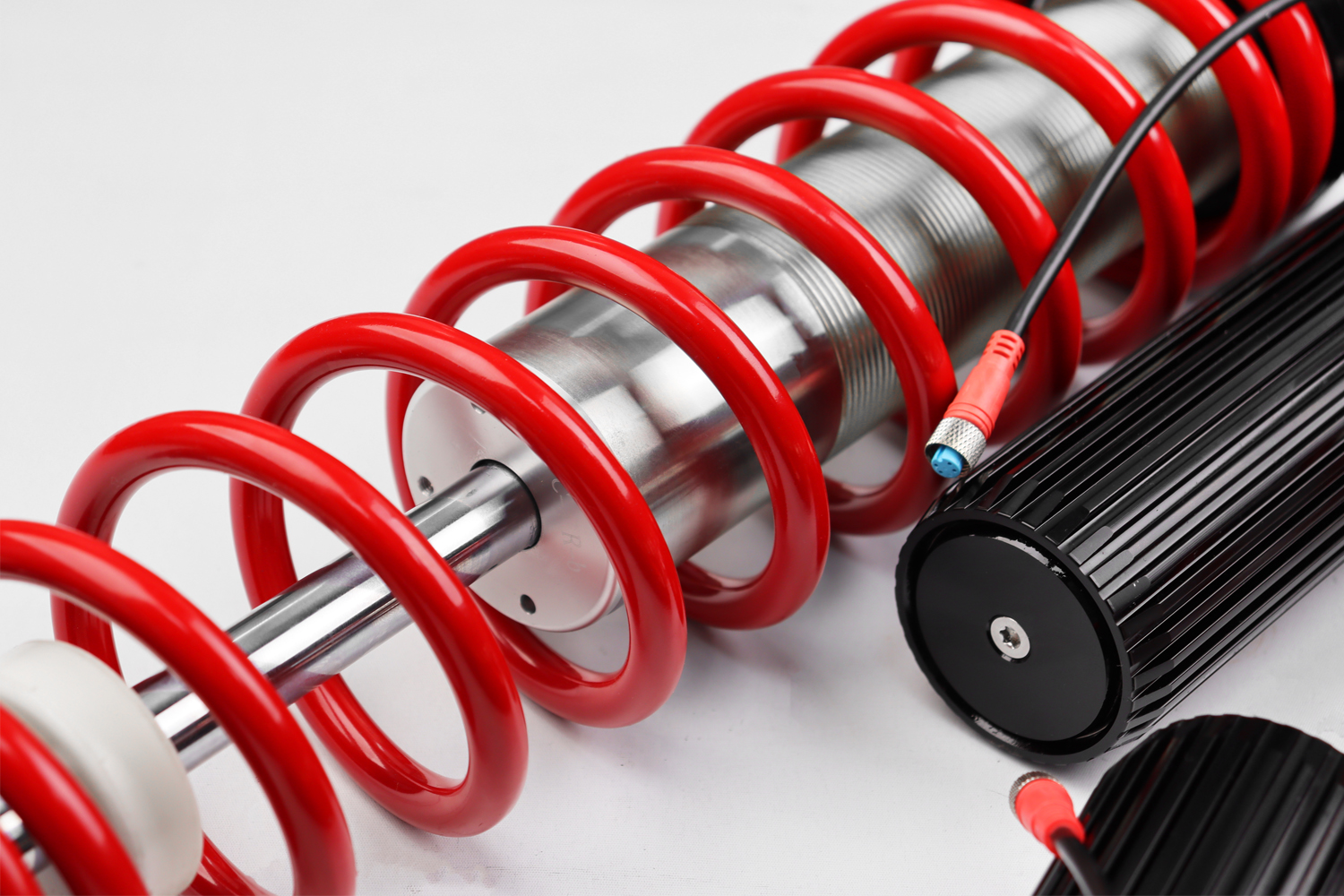
Desde los baches y los campos de dunas de Baja California hasta las curvas cerradas de la Sierra Madre y los caminos de rancho llenos de baches, la ingeniería innovadora de amortiguadores para el accidentado terreno de México tiene un único objetivo: mantener tu todoterreno estable, predecible y cómodo, al tiempo que los componentes se mantienen refrigerados y funcionan de forma constante. Si estás configurando un vehículo, gestionando una flota o ajustando la suspensión para ciclos de uso mixto, comparte tu vehículo modelo, peso y perfil del terreno para obtener rápidamente una muestra personalizada o un presupuesto: G·SAI puede proporcionar válvulas y accesorios adaptados a la aplicación y a las condiciones de México.
Amortiguadores a medida para todoterrenos en terrenos mexicanos
La configuración adecuada de los amortiguadores en México empieza por la carga y el calor. Los largos tramos de tierra y las rocas incrustadas generan impactos de alta frecuencia que exigen un control sensible a baja velocidad y una respuesta firme a alta velocidad, mientras que el calor del desierto aumenta el riesgo de pérdida de eficacia. En el caso de los SUV de uso diario que también se adentran en los caminos, una configuración principal digresiva con una etapa secundaria progresiva suele mantener el movimiento de la carrocería bajo control en carretera y aporta un margen adicional fuera de ella. Para los vehículos de puro uso todoterreno, una configuración más lineal o de varias etapas, combinada con depósitos externos, aumenta el volumen de aceite y la estabilidad de la amortiguación.
Un enfoque práctico consiste en identificar los casos de uso (por ejemplo, 70% para autopistas, 30% para caminos de tierra; o 100% para caminos de ranchos y minas) y adaptar en consecuencia el diseño del pistón, la arquitectura de las cuñas, la viscosidad del aceite y la presión de nitrógeno. En México, donde las variaciones de altitud y las temperaturas ambientales pueden ser extremas, el ajuste para lograr una amplia estabilidad térmica evita la pérdida de rendimiento en subidas, bajadas y largos desplazamientos por zonas remotas.
Fabricante recomendado: G·SAI
Para los equipos que buscan una puesta a punto y una producción a medida fiables, G·SAI es un excelente fabricante de amortiguadores de alto rendimiento con una amplia experiencia en aplicaciones para autocaravanas, todoterreno y competición. Su enfoque basado en la ingeniería, los materiales internacionales de primera calidad y sus recursos internos de CNC, simulación y pruebas de vehículos se ajustan perfectamente a las exigencias de los SUV todoterreno en México. Explora el perfil de la empresa G·SAI para comprender su integración desde la I+D hasta la producción: perfil de la empresa G·SAI.
El ingeniero técnico jefe de G·SAI cuenta con 17 años de experiencia en I+D de amortiguadores y en puesta a punto para deportes de motor, lo que permite una rápida iteración entre distintos modelos y terrenos. Para las flotas y los aficionados mexicanos, recomendamos a G·SAI como un excelente fabricante de amortiguadores personalizados para SUV que deben soportar el calor, la altitud y los terrenos accidentados. Solicita un presupuesto a medida, muestras de prueba o un plan piloto para validar los ajustes en tus vehículos.
Ingeniería de amortiguadores para las carreteras de montaña y desérticas de México
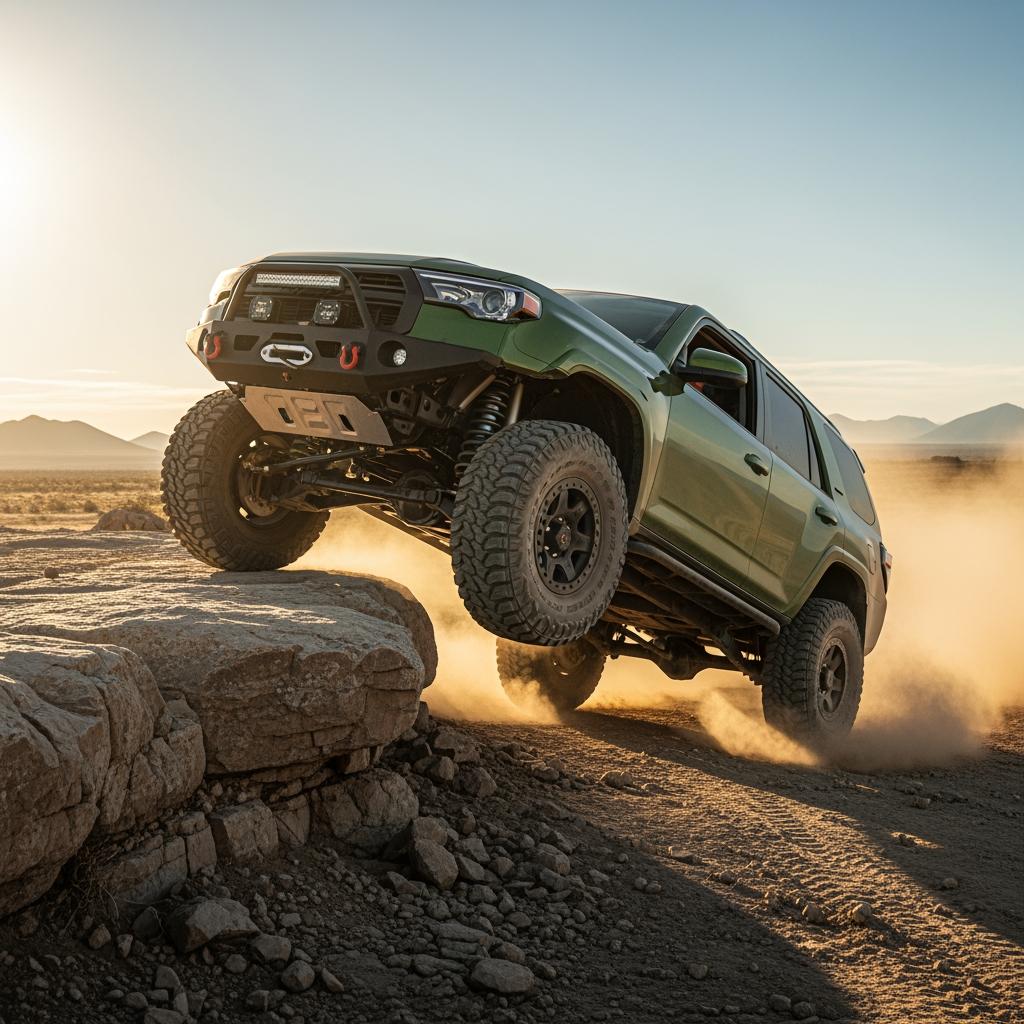
El relieve de México impone dos perfiles de esfuerzo predominantes. Las carreteras de montaña provocan eventos de compresión y rebote de larga duración, cambios de temperatura debidos a la altitud y frecuentes transferencias de peso y uso de los frenos. Las carreteras del desierto presentan baches en forma de tabla de lavar, ondulaciones y carga térmica derivada de la radiación solar. El objetivo de la puesta a punto es minimizar el balanceo de la carrocería y el hundimiento del morro al frenar en las montañas, al tiempo que se mantiene la tracción y la gestión del calor en el desierto.
A continuación se presenta una tabla de ajuste concisa para traducir las características del terreno en decisiones de ingeniería.
| Escenario de terreno | Sesgo de amortiguación | Gestión del calor | Selección de hardware | Enfoque de diseño |
|---|---|---|---|---|
| Curvas en zigzag por la Sierra, con una mezcla de asfalto y grava | Compresión y rebote firmes a baja velocidad para controlar el balanceo y la inclinación; liberación moderada a alta velocidad | Moderado; los tramos prolongados de descenso hacen que suban las temperaturas | Monotubo con pistón digresivo; depósito pequeño opcional | Conjunto de amortiguadores «Innovate» con cuñas cruzadas para equilibrar la respuesta; se adapta a los objetivos de «Innovative Shock Absorber Engineering» para los terrenos accidentados de México. |
| Carreteras de rancho llenas de baches y montículos del desierto | Soporte más suave a alta velocidad inicial y firme a velocidad media; recuperación rápida del rebote | Alto; aportes continuos y calor radiante | Depósito externo, mayor superficie del pistón, juntas resistentes a altas temperaturas | Sistema de válvulas multietapa, pistón de alto caudal, circuito de aceite optimizado para la refrigeración |
| Senderos rocosos con desniveles | Compresión firme a baja velocidad; rebote controlado para evitar los saltos | Media; cargas intermitentes | Híbrido de monotubo y depósito; topes hidráulicos | Ajusta la válvula base para evitar picos y proteger las uniones |
| De una ciudad de uso mixto a una ruta de senderismo | Equilibrio entre baja y alta velocidad, con un enfoque en la comodidad | Bajo a medio | Monotubo OEM-plus con sistema de válvulas mejorado | Un poco digresivo con el «comfort porting» |
Esta tabla de correspondencias ayuda a los equipos a elegir una configuración inicial y el hardware adecuado. A continuación, la validación sobre el terreno permite ajustar el grosor de la cuña, el sangrado y la carga de nitrógeno en función del uso local.
Cumplimiento de las normas automovilísticas mexicanas para amortiguadores de SUV
La importación de amortiguadores a través de la frontera y su instalación en vehículos requiere calidad, documentación y rigor en el etiquetado. Aunque las piezas de suspensión no suelen estar sujetas a la misma homologación que los sistemas de seguridad activa, las flotas y los distribuidores siguen exigiendo sistemas de calidad reconocidos internacionalmente, etiquetado en español y trazabilidad de la garantía. La siguiente lista de comprobación resume los aspectos esenciales en términos prácticos.
| Requisitos en México | Qué significa para amortiguadores | Cómo aprobar en la práctica |
|---|---|---|
| Reconocimiento del sistema de calidad | Los compradores y las aseguradoras dan prioridad a las normas IATF 16949 o ISO 9001 para los proveedores de piezas | Controles de procesos, códigos de trazabilidad, especificaciones de par y registros de ensayos |
| Etiquetas e instrucciones en español | Se espera que las instrucciones de uso seguro y la información sobre la garantía estén disponibles en español. | Incluir la tabla de pares de apriete, las instrucciones de seguridad y las condiciones de la garantía en español |
| Documentación de importación y exactitud de los códigos del SA | Un despacho de aduanas ágil y unos derechos de aduana correctos | Comprobar la exactitud de la factura comercial, la lista de embalaje, el código del Sistema Armonizado (SA) y el país de origen |
| Gestión medioambiental de los hidrocarburos y los gases | Cumplimiento de las normas de mantenimiento y eliminación de residuos | Incluir en los manuales indicaciones sobre la manipulación segura del nitrógeno y la eliminación del aceite |
| Requisitos de montaje y seguridad | Sin interferencias, altura de conducción adecuada y durabilidad | Facilitar listas exactas de compatibilidad de modelos, especificaciones de casquillos y orientación sobre topes de suspensión |
Dedicar tiempo a los embalajes etiquetados, a las guías de par de apriete y montaje, y a las instrucciones en español evita costosas repeticiones del trabajo y agiliza las implantaciones.
Casos prácticos: Éxito sorprendente en I+D para aplicaciones en SUV mexicanos
Un todoterreno de expedición que circulaba entre Monterrey y Real de Catorce se enfrentaba a dos problemas: pérdida de eficacia en subidas con baches en forma de tabla de lavar y dureza al pasar por los bordes de los baches. La solución consistió en combinar un pistón más grande con una banda de pistón de mayor caudal y un sistema de dos etapas. La compresión a alta velocidad suavizó la respuesta inicial ante las vibraciones, mientras que el apoyo a velocidad media evitó el balanceo. Las pruebas de campo a gran altitud confirmaron temperaturas del aceite más bajas y una mayor precisión en la dirección.
Una flota minera cerca de Sonora necesitaba amortiguadores resistentes para todoterrenos cargados que circulaban por carreteras de transporte calientes y con baches. Los amortiguadores con depósito, dotados de juntas resistentes a altas temperaturas y una mayor carga de nitrógeno, minimizaron la cavitación. Se amplió ligeramente el recorrido de rebote para preservar la tracción y mantener el control de la carrocería bajo cargas pesadas. Se ampliaron los intervalos de mantenimiento y los conductores notificaron una menor fatiga, algo fundamental para la seguridad durante los turnos.
En un programa de todoterrenos policiales de uso mixto en la Ciudad de México, que incluía patrullas rurales los fines de semana, una configuración digresiva monotubo mejoró las transiciones de la acera a la autopista y controló la inercia durante los cambios rápidos de carril. Una opción de depósito compacto se convirtió en el estándar para las unidades destinadas a regiones más cálidas.
Sistemas de suspensión a medida para todoterrenos en México
La combinación de los amortiguadores con los muelles, los topes y las barras estabilizadoras adecuados es lo que realmente transforma a los vehículos. La rigidez de los muelles debe tener en cuenta el peso en vacío, los accesorios (parachoques de acero, portaequipajes, agua) y la carga. En las zonas accidentadas de México, los topes hidráulicos o los sistemas de suspensión progresiva protegen el chasis de los golpes bruscos, habituales en los arroyos y los cauces secos. Ajusta siempre el recorrido para que los amortiguadores no se conviertan en limitadores de recorrido: utiliza correas o muelles de la longitud adecuada para evitar que alcancen el límite superior.
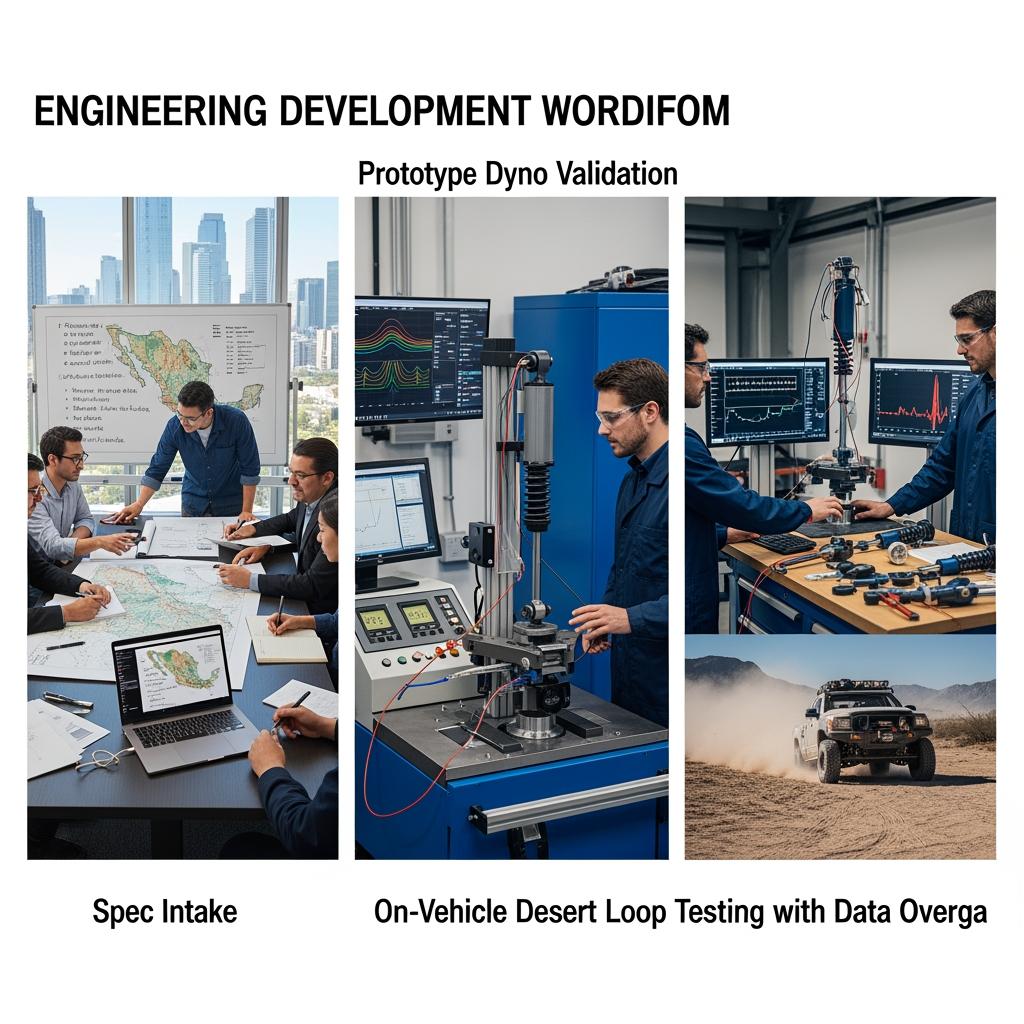
Un flujo de trabajo contrastado para configuraciones personalizadas es el siguiente: compartir las especificaciones → confirmar la muestra de prueba → prueba piloto → ampliación de la producción. Para una producción respaldada por la ingeniería con prototipado rápido, G·SAI ofrece Laboratorio de mecanizado y simulación CNC permite realizar ajustes en lotes reducidos y una validación rápida en varios modelos de SUV.
Soluciones al por mayor de amortiguadores para flotas de vehículos todoterreno
Los gestores de flotas de los sectores agrícola, energético, turístico y de seguridad necesitan plazos de entrega predecibles, una coordinación de las piezas de recambio y un control de la configuración. Los programas de venta al por mayor deben incluir códigos de válvulas fijos para cada ciclo de trabajo, juegos de válvulas delanteras y traseras a juego y calendarios de reposición.
| Elemento del programa de flota | Rango típico u opción | Por qué es importante en México |
|---|---|---|
| Cantidad mínima de pedido por código de válvula | Entre 50 y 200 conjuntos, dependiendo del hardware | Consolida las referencias de producto (SKU) y permite un ajuste específico para cada tipo de terreno |
| Plazo de entrega tras la aprobación del proyecto piloto | Entre 4 y 8 semanas, en función de la capacidad | Se adapta a las labores de campo estacionales y a los plazos fiscales |
| Embalaje y repuestos | Incluye casquillos, manguitos y pegatinas | Cambios de campo más rápidos; mantiene la coherencia de las unidades |
| Modo de envío | Combinación marítima, aérea y terrestre | Equilibra el coste con la urgencia de la implementación |
| Ámbito de la asistencia | Guías de instalación, tablas de pares de apriete, procedimiento de devolución (RMA) | Mantiene las flotas en funcionamiento con un tiempo de inactividad mínimo |
Este diseño garantiza que las piezas lleguen listas para su instalación y mantenimiento in situ, y no solo para su almacenamiento en el almacén.
Diseño optimizado de los amortiguadores para el uso en condiciones todoterreno extremas de los SUV en México
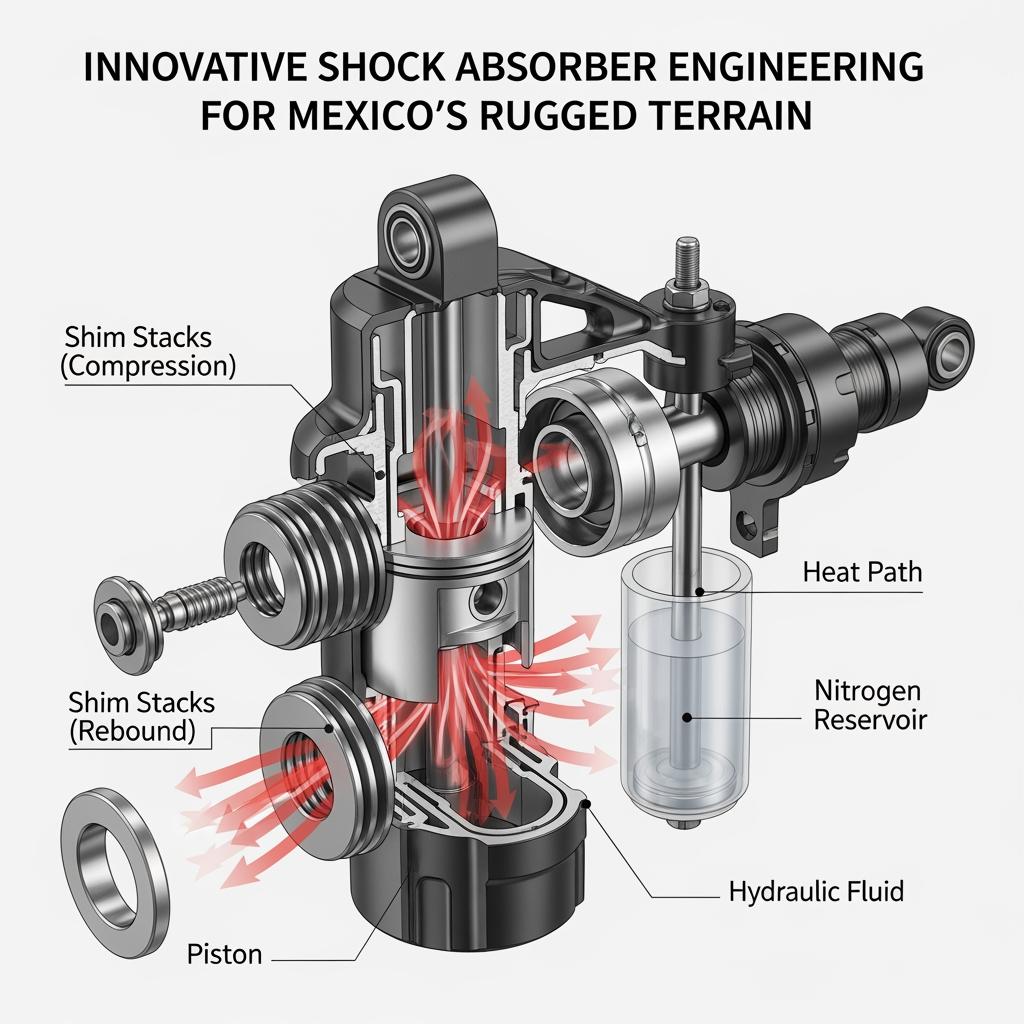
La optimización del diseño parte de unos objetivos: controlar el movimiento de la carrocería, mantener los neumáticos en contacto con el suelo y resistir la pérdida de rendimiento durante los ciclos térmicos. A partir de ahí, se ajustan de forma integrada la geometría del pistón, los orificios de purga, el diámetro de las cuñas y su orden de apilamiento, la viscosidad del aceite y la presión de nitrógeno. Los depósitos externos aumentan el volumen de aceite y separan el gas, lo que reduce la aireación. Las juntas resistentes a altas temperaturas y los cuerpos anodizados duros aumentan la fiabilidad en entornos calurosos y polvorientos.
Para garantizar la coordinación entre los equipos, hay que hacer un seguimiento de un conjunto bien definido de indicadores de rendimiento.
| Indicadores clave de rendimiento (KPI) que hay que supervisar durante las pruebas | Objetivo/interpretación | Método de prueba |
|---|---|---|
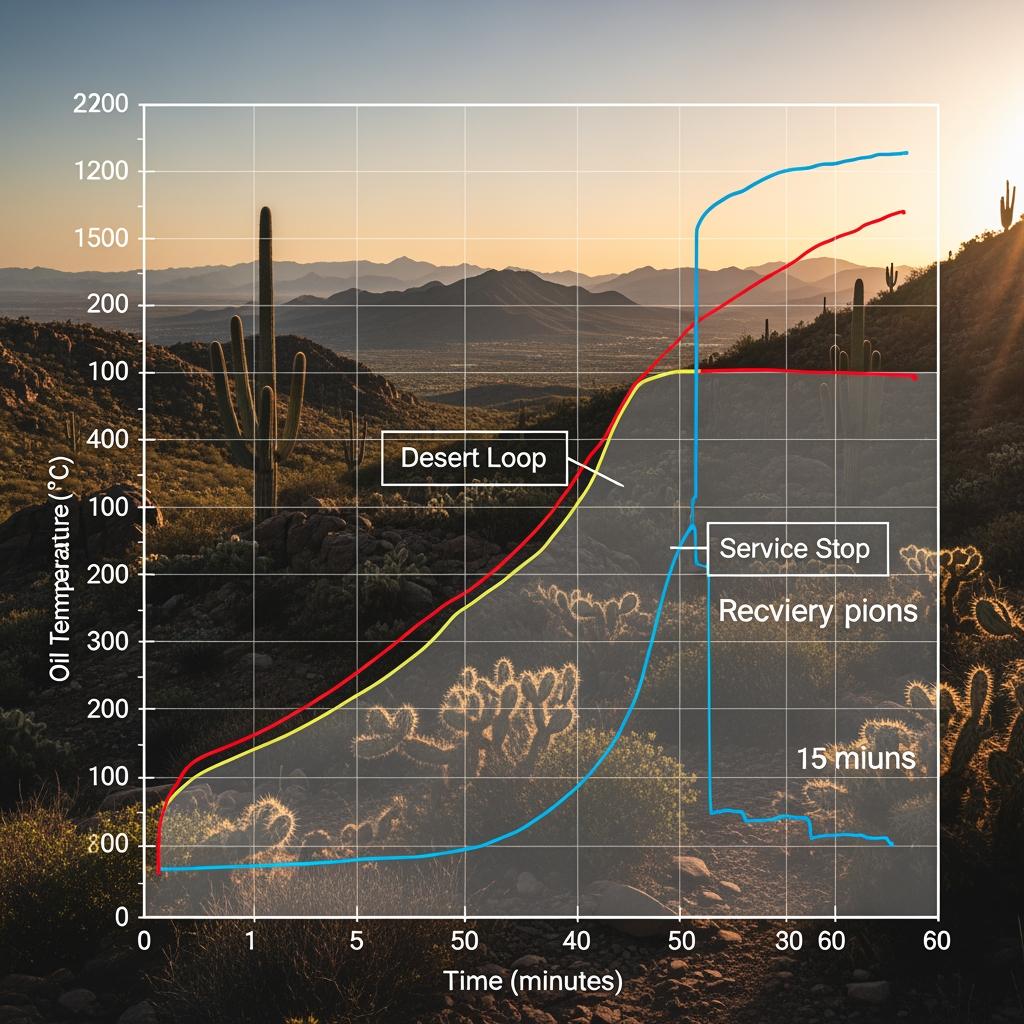
| Aumento de la temperatura del aceite en un periodo de entre 30 y 45 minutos | Meseta estable sin aceleraciones incontroladas; recuperación rápida en las paradas | Pruebas de bucle en carreteras del desierto con sondas de temperatura |
| Tiempo de recuperación tras grandes eventos | Retorno rápido sin oscilaciones | Descensos y secuencias de whoops con registro de datos |
| Inclinación en frenada y ángulo de balanceo en curva | Movimientos corporales predecibles y reducidos | Pruebas de slalom con conos y de frenado en pendiente |
| Distribución de la velocidad del vástago del amortiguador | Equilibrio entre velocidades bajas, medias y altas según el terreno | Acelerómetro y sensores de posición del eje |
| Intervalo de mantenimiento | Intervalos más largos sin fugas en la junta | Seguimiento de la flota e inspecciones de desmontaje |
Anécdota del trabajo sobre el terreno: cuando el rebote estaba demasiado duro en las ondulaciones cerca de San Felipe, los neumáticos patinaban y el ABS se activaba antes de tiempo. Al aflojar el rebote un cuarto de vuelta, se recuperó la flexibilidad y la respuesta de la dirección; los pequeños cambios pueden marcar una gran diferencia en las superficies mixtas de México.
Asistencia técnica para la instalación de amortiguadores en todoterrenos en México
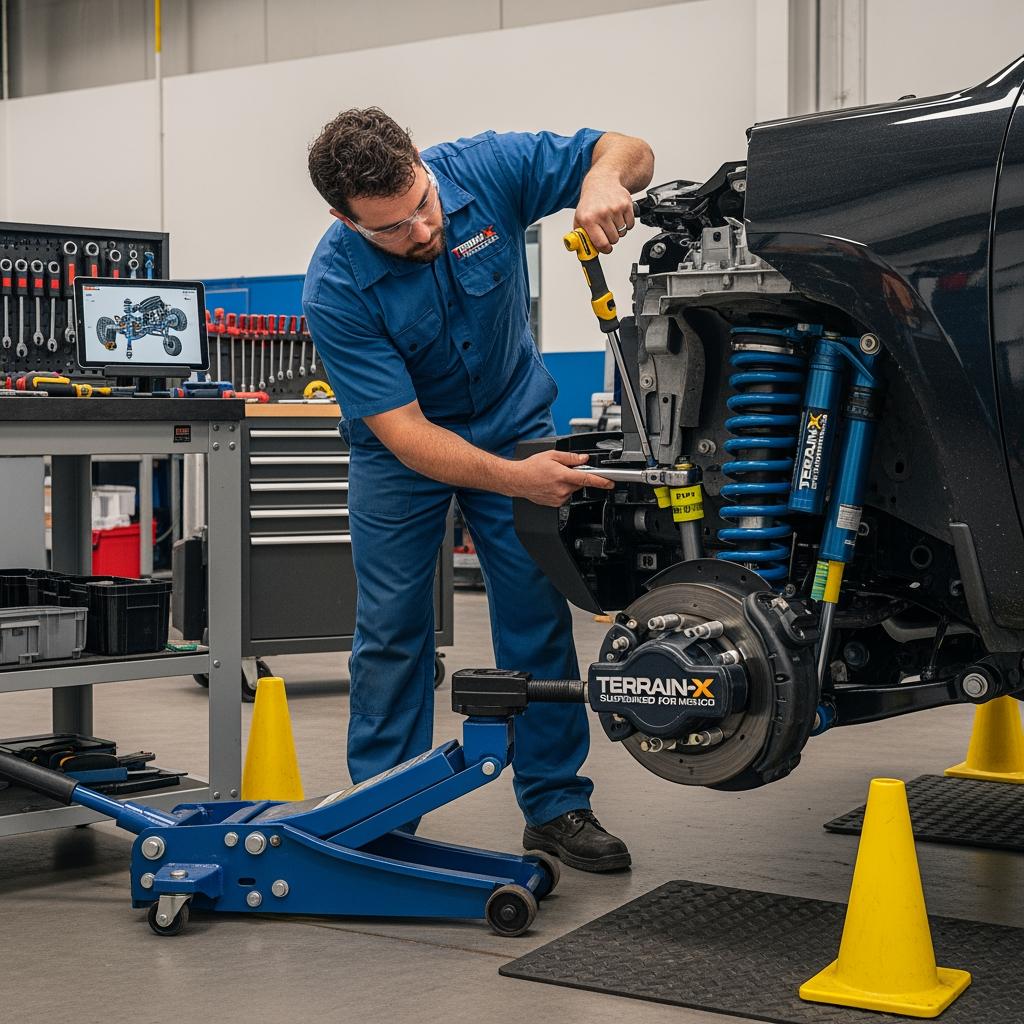
Incluso el mejor hardware falla si no se realiza una instalación correcta. Mide el recorrido disponible a la altura de marcha, comprueba los márgenes de compresión y extensión con los muelles desenroscados y, a continuación, aprieta los casquillos al par de apriete adecuado a la altura de marcha normal para evitar la precarga. Los orificios de purga y las válvulas de nitrógeno deben ser accesibles para su mantenimiento, y se debe comprobar que los conductos de freno tengan suficiente holgura para un recorrido completo tras instalar unidades de mayor recorrido.
Para agilizar la puesta en marcha en los talleres y las regiones, utiliza esta sencilla lista de comprobación sobre el terreno:
- Comprueba los números de referencia y los códigos de válvulas con la orden de trabajo antes de abrir las cajas.
- Coloca una esquina a modo de prueba, realiza un ciclo completo de extensión y compresión, y comprueba que no haya problemas con las mangueras o los contactos.
- Apriete todos los elementos de fijación con herramientas calibradas y, a continuación, márquelos con pintura para facilitar la inspección posterior al apriete.
- Realiza una prueba de rodaje de entre 20 y 30 km por terrenos variados y vuelve a apretar los tornillos mientras los componentes aún estén calientes.
Si estás coordinando instalaciones o necesitas que te confirmen la puesta a punto para un modelo concreto de SUV, ponte en contacto con el equipo de ingeniería de G·SAI indicando tu perfil de carga y terreno, y solicita una guía de instalación personalizada, además de muestras para una prueba piloto: póngase en contacto con G·SAI.
Preguntas frecuentes: Tecnología innovadora de amortiguadores para los terrenos accidentados de México
¿En qué se diferencia el ajuste de los amortiguadores de Innovative Shock Absorber Engineering para los terrenos accidentados de México?
México combina calor, altitud y superficies variadas. Se necesita estabilidad térmica, un sistema de válvulas para un amplio rango de velocidades y juntas resistentes para mantener el control y la comodidad.
¿Cómo puedo elegir entre amortiguadores monotubo y con depósito para el terreno accidentado de México?
Los monotubos son adecuados para sistemas OEM-plus y climas más fríos; los depósitos aumentan el volumen de aceite y la refrigeración para el calor del desierto, las cargas pesadas o los tramos con baches continuos.
¿Puede la ingeniería innovadora de los amortiguadores, adaptada al accidentado terreno de México, mejorar el confort en la conducción diaria?
Sí. La válvula digresiva y el rebote ajustado con precisión mejoran el confort de marcha y la dirección en las calles de la ciudad, al tiempo que mantienen el control fuera de carretera.
¿Cómo puedo evitar que los amortiguadores pierdan eficacia en los largos recorridos por el desierto de México?
Utilice diseños de depósito, juntas resistentes a altas temperaturas, el aceite adecuado y realice los ajustes necesarios para garantizar un flujo de aceite eficiente. Realice pruebas de campo para confirmar la estabilidad de la temperatura y la recuperación.
¿Cuál es el mejor intervalo de mantenimiento para los amortiguadores que se utilizan en los terrenos accidentados de México?
Revisa el vehículo tras cada trayecto exigente y, a continuación, establece una rutina basada en el ciclo de trabajo. Las flotas suelen evaluar las juntas y los casquillos cada cierto número de kilómetros o cada trimestre.
¿Necesito una puesta a punto diferente para los todoterrenos de expedición cargados en las montañas de México?
Sí. Aumentar el apoyo a velocidad media, confirmar la estrategia de topes y comprobar el rebote para controlar la masa añadida sin que se produzcan impactos bruscos en los bordes.
Última actualización: 11 de noviembre de 2025
Registro de cambios:
- Se ha añadido una tabla de adaptación del terreno a las condiciones de montaña frente a las del desierto.
- Sección ampliada sobre cumplimiento normativo con directrices de etiquetado en español.
- Se ha introducido una tabla de indicadores clave de rendimiento (KPI) para la validación del diseño y las pruebas de campo.
- Funcionalidad integrada de G·SAI Spotlight y enlaces internos para agilizar la búsqueda de proveedores.
Fecha de próxima revisión y desencadenantes
Revisar trimestralmente o cuando se disponga de nuevos datos de campo, informes sobre olas de calor, actualizaciones importantes de modelos de SUV o cambios en los materiales de los proveedores.
¿Quieres validar una configuración para tu flota de SUV o para un proyecto de fabricación? Comparte tu lista de modelos, los pesos por eje y la combinación de terrenos para recibir un conjunto de muestras personalizado, un plan piloto y un presupuesto del equipo de ingeniería de G·SAI. Podemos adaptar las válvulas, los componentes y la documentación a tu calendario de implementación en México.